
A second DWI arrest brings a flood of conflicting advice. One voice says to take the first offer and move on. Another says to fight every point. If you need a second offense DWI attorney in Saratoga Springs, this guide evaluates both paths so you can choose with full information.
Both paths can be reasonable. The right choice depends on the stage your case has reached and on what the evidence shows. An early plea closes some options, while defense-first representation keeps them open longer. This article shows what you give up and what you keep at every stage.
Choose a quick plea only if you have reviewed the evidence and accept the offer. Choose defense-first if you want every option weighed before anything is decided.
Quick Plea or Defense-First: What Changes at Each Step
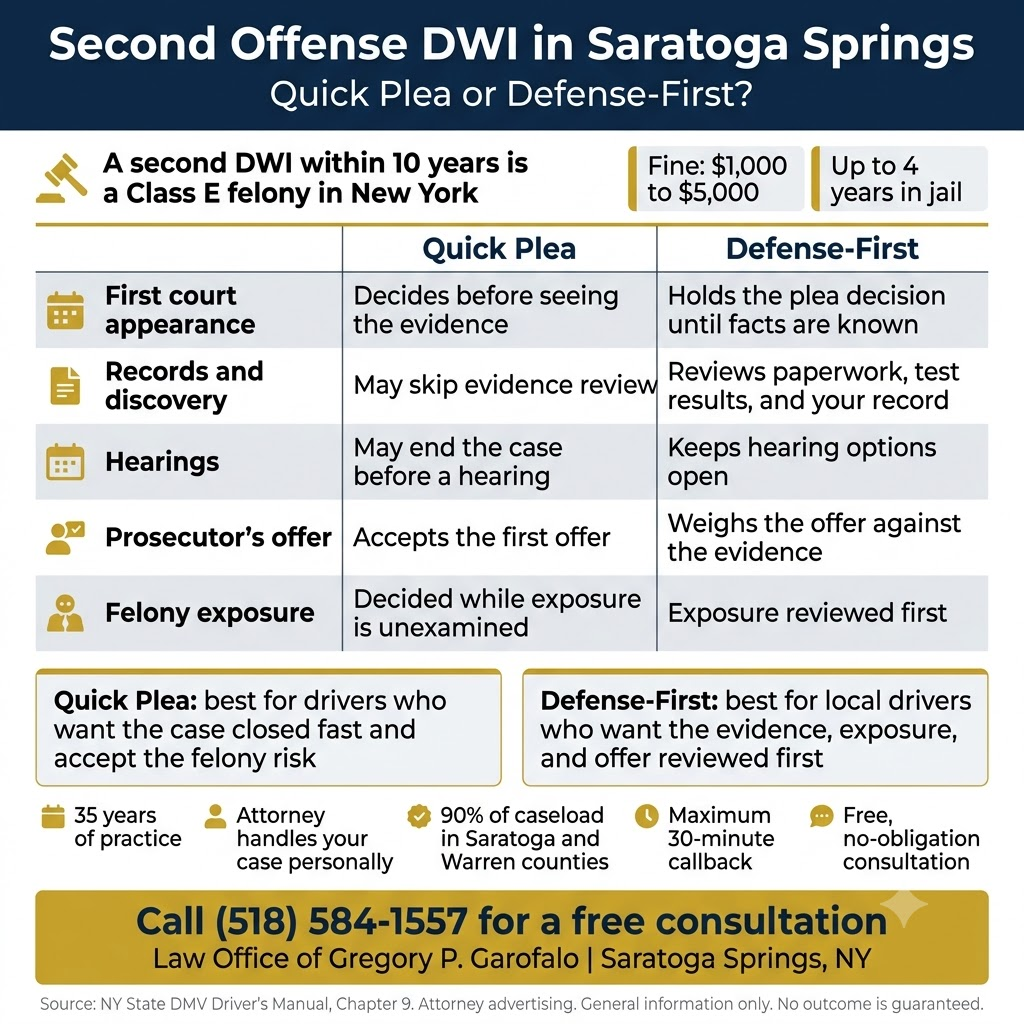
A quick plea decides early, while defense-first decides late and with more information. The table shows what each choice closes off and keeps open at every stage.
| Stage | Quick plea | Defense-first |
| First court appearance | Commits to a decision before you have seen the evidence | Handles the appearance and holds the plea decision until the facts are known |
| Records and discovery | May skip the review of arrest paperwork and test results | Reviews the paperwork, test results, and your record before advising you |
| Any hearing, suppression, or DMV | May end the case before a hearing takes place | Keeps hearing options available while the facts are weighed |
| The prosecutor’s offer | Accepts the first offer as presented | Weighs the offer against the evidence and your exposure |
| Felony exposure | Decides while felony exposure is still unexamined | Reviews the exposure before any decision |
According to the New York State DMV Driver’s Manual, Chapter 9, “a second DWI within 10 years is a Class E felony, with a fine of $1,000 to $5,000 and up to 4 years in jail.”
Second Offense DWI Attorney in Saratoga Springs: What the Law Office of Gregory P. Garofalo Does Best
Defense-first representation means your attorney reviews the arrest paperwork, the test results, and your record before advising you to accept or reject any offer.
At the Law Office of Gregory P. Garofalo, you work directly with Gregory P. Garofalo, Esq., from your first call through resolution. That direct review keeps your options open while the facts come into focus.
1. Direct, Personal Access From Intake to Courtroom
Many firms hand you off to staff after the first meeting. The Law Office of Gregory P. Garofalo works differently.
As a solo practice, it puts the attorney on your case from intake to courtroom, so you always know who is handling it and where it stands.
One former client says “he’s fair, he’s honest, and he doesn’t overpromise.” That candor matters in a second offense case, where no one can promise a result.
2. Local Court Knowledge in Saratoga and Warren Counties
Local knowledge shapes how you weigh an offer. Attorney Garofalo has practiced for 35 years, and about 90% of the caseload sits in Saratoga and Warren counties.
Albany’s Town of Colonie court is the largest court where appearances take place. Knowing each courtroom’s expectations helps explain what an offer means in practice. If you search for a second offense DWI attorney in Saratoga Springs, ask about this local experience directly.
3. Prompt Response and Verified Credentials
DWI cases move fast, and deadlines are strict. The firm sets a maximum response time of 30 minutes after you call. Gregory P. Garofalo, Esq. holds an Excellent rating on Avvo and a Featured Attorney distinction in DWI/DUI law.
Membership in the Saratoga County Bar Association and the New York State Defenders Association adds professional standing. Yes, a quick plea moves faster. But that speed can cost you options you cannot recover.
What a Quick Plea Offers
A quick plea resolves the case early. It offers speed and certainty, and it ends the stress of an open case sooner. It can fit a driver who has reviewed the evidence and accepts the offer on the table.
It also carries stakes.
“The New York State DMV lists the penalties for alcohol or drug-related violations as loss of driving privileges, fines, and a possible jail term. The DMV also assigns 11 points to any alcohol- or drug-related conviction or incident.”
For a second offense, a quick plea adds felony exposure. It leaves little room to test the evidence, and it can end the case before a hearing takes place.
The Key Differences That Matter
The difference comes down to timing and how much information you have when you decide.
1. Deciding at the First Appearance vs. After the Evidence Is Reviewed
Yes, an early decision brings relief. But it asks you to commit before you have seen the arrest paperwork or the test results. Defense-first representation moves the decision to the point where the evidence has been reviewed. You then weigh the offer against facts, not fear.
2. Accepting the First Offer vs. Weighing It After Any Hearings
Yes, the first offer is certain and available now. But it may close the door on hearings that test the stop, the test, or the license action. Defense-first keeps those hearings available while the offer stays under review. No outcome is promised either way, and every case turns on its own facts.
Which Option Is Best for You?
A quick plea is best for drivers whose priority is closing the case quickly and who accept the felony exposure that comes with deciding before the evidence is reviewed.
Defense-first representation is best for local drivers facing a second DWI within 10 years who want a focused, experienced attorney reviewing the evidence, the exposure, and the offer before anything is decided.
Frequently Asked Questions (FAQs)
Q1. Can I plead to a lesser charge on a second offense DWI in New York?
Possibly, but the answer depends on the facts, your record, and what the prosecutor and court accept. A second DWI within 10 years can be charged as a Class E felony, which raises the stakes of any plea. An attorney reviews the evidence before advising you.
Q2. Is a second DWI within 10 years a felony in New York?
Yes. A second DWI within 10 years is a Class E felony in New York. According to the New York State DMV Driver’s Manual, Chapter 9, the penalties include a fine of $1,000 to $5,000 and up to 4 years in jail.
The exact charge depends on your facts and prior record, so review your paperwork with an attorney before you decide anything.
Q3. How long does a DWI case take in Saratoga County?
DWI and traffic cases at the Law Office of Gregory P. Garofalo generally take six months to 2 years to resolve, and the fastest resolution takes about 4 months.
A second offense can take longer or shorter depending on the facts and the exposure. You typically must appear within 2 weeks of the violation, so early action matters.
Q4. Does the Law Office of Gregory P. Garofalo offer a free consultation for a second offense DWI in Saratoga Springs?
Yes. The firm offers a free consultation with no obligation to proceed. The maximum response time is 30 minutes after you call. You can reach the office at (518) 584-1557.
Your Next Step
Your next step is simple. Gather your arrest paperwork and any DMV notices, then bring them to a free consultation. A focused review of those documents shows which stage your case has reached and which options remain.
If you want a second offense DWI attorney in Saratoga Springs quickly, call the Law Office of Gregory P. Garofalo at (518) 584-1557 for a free, no-obligation consultation.